


















Have you tested your pool water lately?
To maintain a clean, safe, and healthy swimming environment it is important that you use the correct pool chemicals and regularly test your pool/spa water.
Pool Water Testing: What to Test & What it Means
Regular pool water testing is the key to keeping your water balanced and your pool safe to swim in. Our free in-store water testing can help you understand whether your pool water is acidic or alkaline, whether your sanitiser is working effectively, and whether your water chemistry is protecting your pool surfaces and equipment.
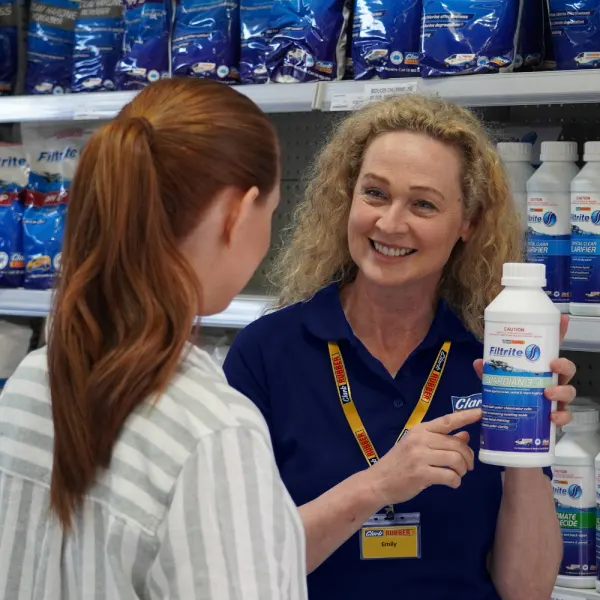
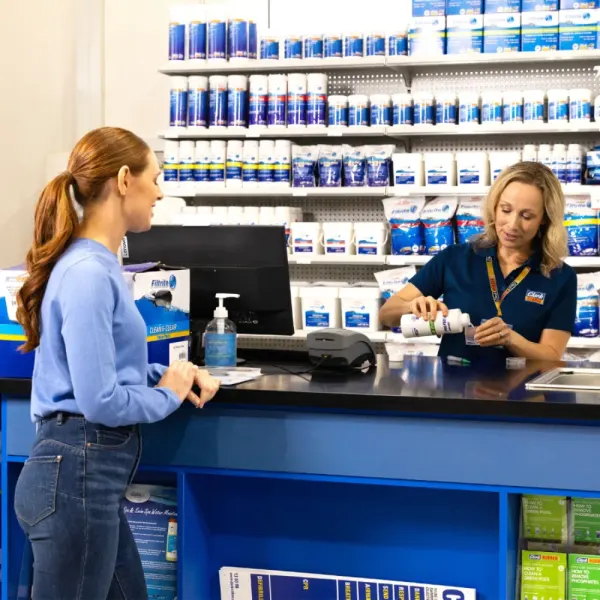
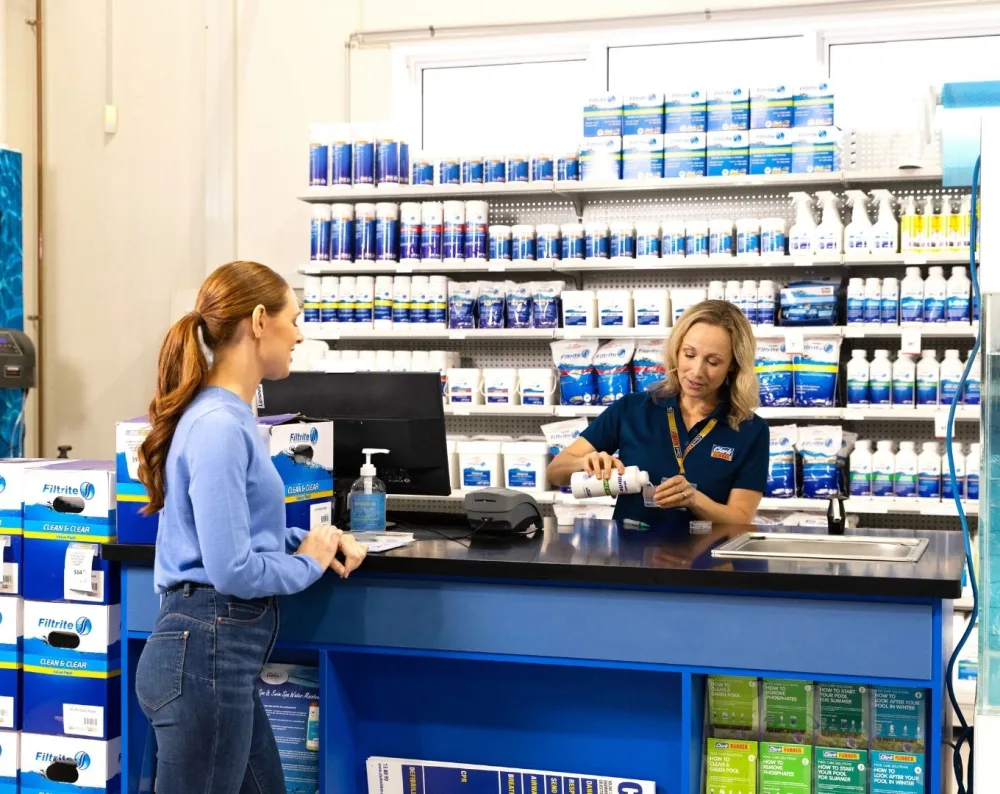
At Clark Rubber, our professional in-store water testing process is quick and simple - just bring a sample of your pool water into store in a clean bottle (taken from elbow depth, away from the skimmer returns) and our team will test it for several key factors.
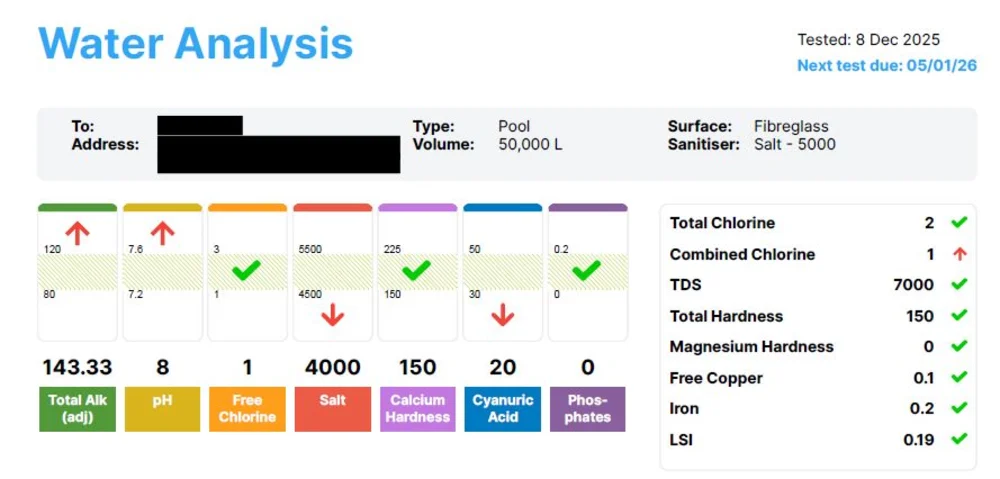
Once complete, you’ll receive a clear water test printout like the example below, and personalised advice on what your pool needs, including recommended products and step-by-step instructions to get your water back into balance.
Each Clark Rubber water test measures the key factors that influence water balance:
- Total Alkalinity shows how stable your water is and helps prevent rapid pH changes.
- pH levels indicate whether your water is too acidic or alkaline, affecting comfort, equipment protection, and sanitiser performance.
- Free Chlorine reveals how much active sanitiser is available to kill bacteria and control algae.
- Salt levels ensure saltwater chlorinators can produce consistent chlorine.
- Calcium Hardness helps prevent equipment corrosion and surface scale.
- Cyanuric Acid (stabiliser) protects chlorine from the sun, so it lasts longer.
- Phosphates, if too high, can feed algae growth, so keeping them low supports a cleaner, healthier pool.
Maintaining a healthy swimming Pool or Spa
Maintaining a healthy pool or spa involves knowledge and management of these areas as well and seeking professional advice and quality products from your local Clark Rubber store:
- Undertaking regular water testing
- Balancing your water
- Sanitising your water
- Avoiding and fixing green pools
- Pool clarifier and flocculants
- Protecting your pool surfaces and pool stain removal
The water testing process:
A water test will tell you everything you need to know about the health of your pool water in only 60 Seconds .
It’s actually a simple process but it does require the right equipment and the right expertise.
- First you need to collect a sample of water from about an arm’s length below the water surface and bring it to your nearest Clark Rubber store.
- Clark Rubber then uses state of the art testing equipment with special reagents and software to analyse the water to provide a high level of detail about the water chemistry.
- After the water analysis our pool professional can present a report showing you what the critical levels are in your pool, which ones are in the proper range and which ones are out of range and need treatment.
- We will the provide recommendations for the chemicals you will need to treat your water chemistry and to get your water back to health.
What we need to know at your Water Test:
When you come to Clark Rubber for your water test we’ll need to ask you some questions about your pool/spa to ensure we can give the right recommendations and advice such as:
- The volume of water in your pool or spa.
- The type of surface of your pool or spa (i.e. Pebblecrete, fibreglass, tiled, vinyl-lined, concrete etc.).
- If you have a salt/mineral pool and what the recommended salt range is for the Chlorinator.
- If you have a chlorine pool, we’ll need to know which type of chlorine you would generally use (i.e. Calcium Hypochlorite, Stabilised Trichlor, Stabilised Dichlor etc).
- We’ll also ask you about how your pool/spa is looking i.e. Is the water looking green or cloudy?
Have More Questions?
Pool water testing tells you what your pool actually needs. Without testing, it’s easy to add the wrong chemicals, which can lead to cloudy water, algae, irritation, and wasted money.
Most pools should be tested at least once per week, and more often in summer, during heatwaves, after storms, or when the pool is being used heavily.
A standard pool water test checks:
Free chlorine
pH
Total alkalinity
Stabiliser (cyanuric acid)
Calcium hardness
Salt levels (saltwater pools)
Some tests also check phosphates and metals.
pH levels indicate whether your pool water is too acidic or too alkaline, which directly affects swimmer comfort, chlorine effectiveness, and the lifespan of your pool equipment. Keeping pH within the recommended range helps prevent eye and skin irritation, protects surfaces from corrosion or scale, and ensures your sanitiser performs at its best for cleaner, healthier water.
Free chlorine measures how much active sanitiser is available in your pool to kill bacteria, destroy harmful contaminants, and prevent algae growth. Maintaining steady free chlorine levels is essential for safe swimming conditions and clear, hygienic water. Proper chlorination also helps reduce unpleasant odours and improves overall water quality.
Pool pH measures how acidic or alkaline your water is. If pH is too high or too low, chlorine becomes less effective and swimmers may experience irritation. Balanced pH is essential for clear water and comfortable swimming.
Total alkalinity is measured in parts per million (ppm) of carbonates and bicarbonate salts in pool water. It helps stabilise pH.
Glossary terms:
Total Alkalinity (TA) — The measure of carbonates and bicarbonate salts in water that helps stabilise pH.
ppm — Parts per million. A standard unit used to measure small concentrations of chemicals in water (for example chlorine, alkalinity, hardness and stabiliser).
Cyanuric acid, often called stabiliser or conditioner, protects chlorine from being destroyed by UV sunlight. By reducing chlorine loss, it helps maintain more consistent sanitiser levels throughout the day, especially inoutdoor pools. Proper stabiliser levels improve chlorine efficiency, reduce chemical consumption, and support long-lasting water clarity.
Phosphates are nutrients that can enter your pool from leaves, dirt, rainwater, or swimmers, and high levels can feed algae growth. While phosphates aren’t harmful themselves, they make it easier for algae to bloom. Keeping phosphate levels low helps reduce algae problems, improves sanitiser efficiency, and contributes toa cleaner, healthier, low-maintenance pool.
Calcium hardness measures the amount of dissolved calcium in your pool water. Correct levels help prevent corrosion of metal equipment, etching of pool surfaces, and the formation of stubborn scale deposits. Balancing calcium hardness is key to extending the life of your pool interior and maintaining clear, well-balanced water.
Salt levels are crucial for saltwater pools because they allow your chlorinator to generate chlorine efficiently. When salt is too low, the chlorinator can’t produce enough sanitiser; when it’s too high, it may strain the system. Keeping salt levels balanced ensures consistent chlorine production, reduces maintenance issues, and supports sparkling, healthy pool water.