



















How a Robotic Pool Surface Skimmer Keeps Debris Under Control
By Clark Rubber | 28th October, 2026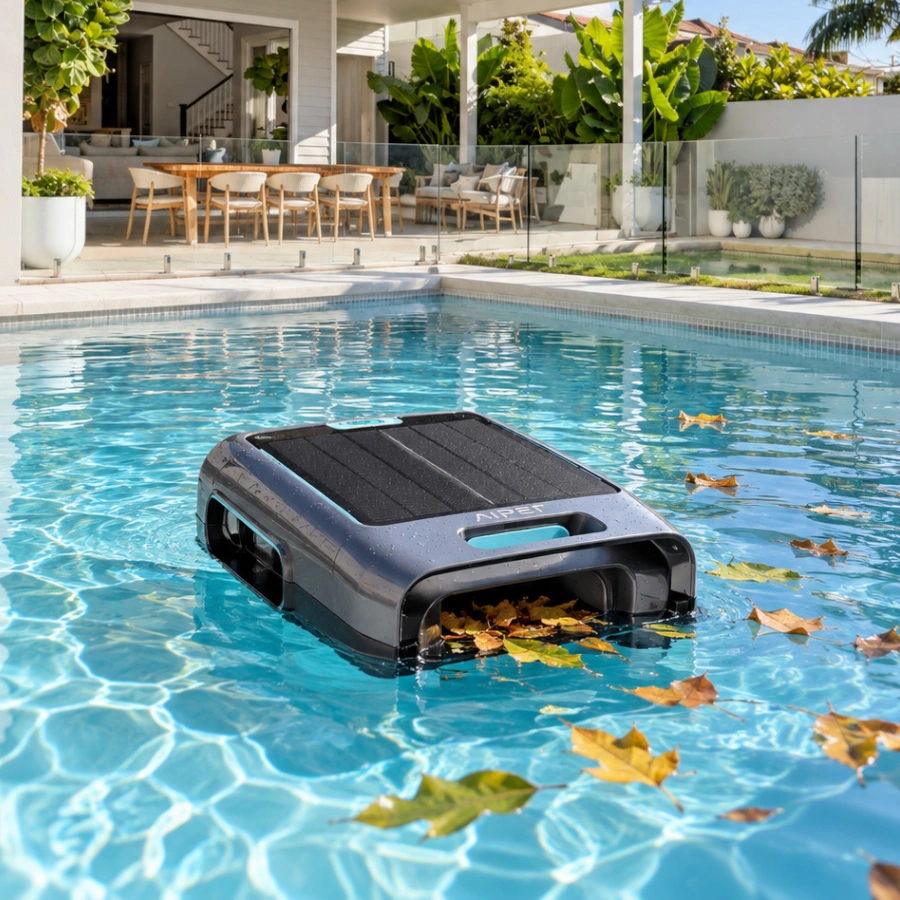
A clear pool can change quickly when the wind picks up. Leaves and insects gather before anyone has found the scoop, and pools near trees can face the same job again within hours.
A solar-powered robotic pool surface skimmer, such as the Aiper Surfer S2 or Dolphin Skimmi 300, uses sunlight to recharge its battery. It moves across the top of the water, collecting floating material before it sinks.
For families who want the pool looking ready more often, that means less time spent walking the edge with a scoop.
This guide looks at what a surface skimmer does, why catching debris early matters, and which pools get the most out of one.
What Is a Robotic Pool Surface Skimmer?
A robotic surface skimmer is a mobile cleaner made for the water's surface. Rather than waiting for floating debris to reach the pool's built-in skimmer, the unit travels around the pool and draws material into its own collection basket or filter.
Depending on the model, it may collect leaves, pollen, insects, and other light debris. Its basket must be emptied as directed.
This is different from a robotic pool cleaner that works on the pool floor or walls. A surface skimmer only handles debris collection at the top, adding a different layer of cleaning.
Robotic Surface Skimmer vs Robotic Pool Cleaner
A robotic surface skimmer and a robotic pool cleaner solve different problems, and knowing which one matches your situation makes it easier to know what you need.
A robotic pool cleaner works on the floor and walls. It scrubs away dirt, algae, and sediment that has already settled, making it the tool for a deeper clean. A robotic surface skimmer works on top of the water. It's built to catch leaves, insects, and light debris while still floating, before any of it has the chance to sink and become the floor cleaner's job.
Many pool owners run both: a surface skimmer for daily debris, and a pool cleaner on a set schedule for the floor and walls. Neither replaces your pool pump, filter, or regular water testing. Both work alongside your existing pool-care routine, not instead of it.
Visit your nearest Clark Rubber store and get your pool water tested for free.
Why Collecting Debris at the Surface Helps
Surface debris is easiest to remove before it becomes waterlogged and sinks. Once it sinks, it may need to be collected by another cleaner or removed during manual vacuuming.
A moving surface skimmer can cover the water while you get on with other jobs. That's useful after windy weather or when nearby plants are dropping leaves and flowers. It also helps between full cleaning sessions, when the water is otherwise in good condition but the top looks untidy.
A pool with less floating debris looks more inviting when the family wants to swim or when friends drop by. Other maintenance still matters, but there's less sitting on the surface waiting for it.
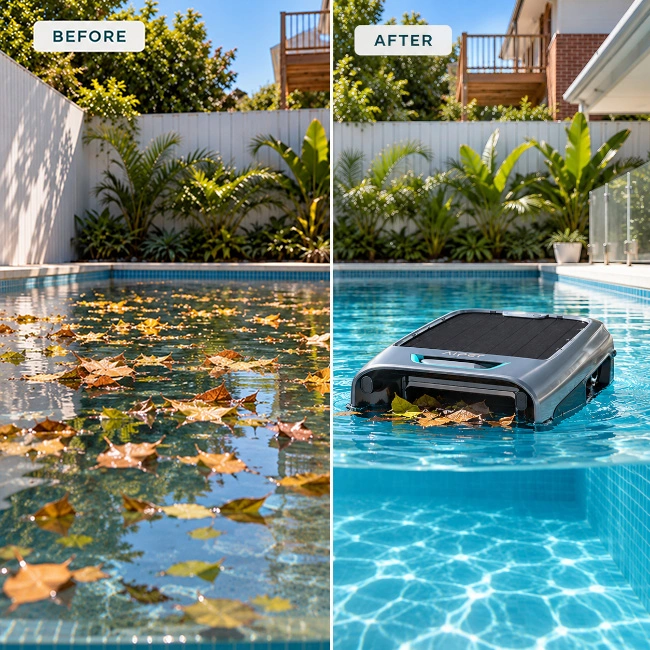
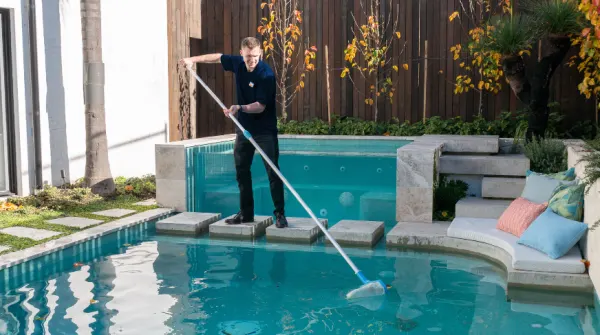
It can reduce frequent manual scooping
Hand skimming is direct and remains useful for a quick clean. It becomes repetitive, however, when fresh debris keeps landing throughout the day.
A robotic unit collects material as it travels. You still empty its basket and inspect the cleaner, but do not have to guide a scoop around the pool each time.
It may ease the debris load elsewhere
Collecting leaves before they sink can leave less material for a floor cleaner to handle. It may also reduce larger floating debris that reaches the pool’s fixed skimmer basket.
The result will depend on the pool, weather, and how often the robotic basket is emptied. A full basket cannot keep collecting at the same rate, so maintenance still matters.
It frees up time for other pool jobs
Skimming by hand takes a few minutes at a time, but those minutes add up when it needs doing daily. A robotic skimmer runs on its own schedule, so that time goes back into testing water, checking equipment, or other maintenance instead.
It also keeps working when nobody's around to grab the scoop, so debris gets collected on a more consistent basis than manual skimming usually allows.
Common Pool Problems a Surface Skimmer Solves
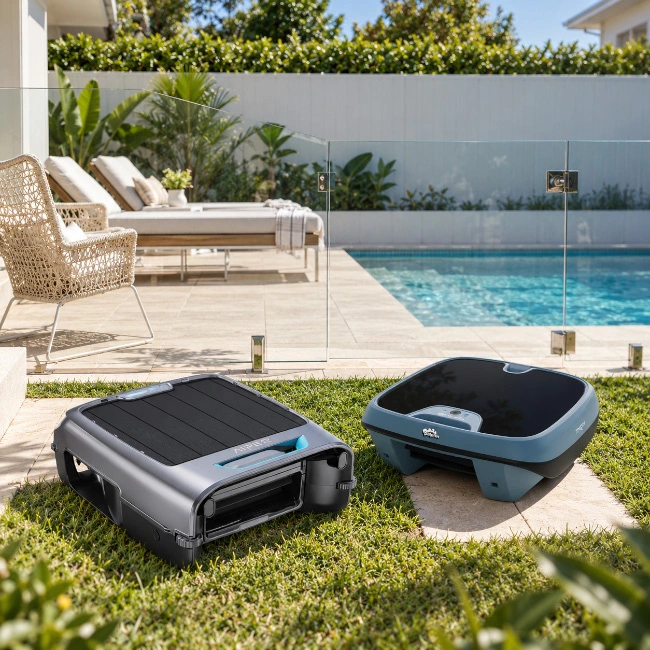
Most pool owners run into the same handful of debris problems, and a robotic surface skimmer answers them in different ways depending on the model.
Leaves and blossom from nearby trees are the most common complaint. The Dolphin Skimmi 300 runs on Smart Solar Recharge, so it keeps working through the worst of leaf drop without needing to be plugged in or swapped onto a charger each day.
Fine pollen and dust often slip straight through a standard skimmer basket. The Aiper Surfer S2 uses a 150-micron filter, catching material that a fixed skimmer would otherwise let settle and cloud the water. It is also solar powered, with a DC charging option when sunlight is limited.
Debris that collects in quiet corners is another frequent issue, since pool circulation doesn't always reach those spots. Both units use obstacle sensors to actively navigate toward that debris rather than waiting for water flow to carry it into range.
Which Pools Benefit Most?
The case is strongest when floating debris is a regular problem. Check the water at different times of day to see what lands there.
A surface model may be worth considering when:
- Trees near the pool regularly drop leaves, blossom, or small seeds
- Wind carries insects and light garden debris onto the water
- The fixed skimmer misses material that gathers in quiet corners
- Manual scooping has become a frequent part of the week
- The pool needs surface cleaning between larger maintenance jobs
Steps, ledges, and narrow areas may affect movement. Check pool compatibility and how the cleaner handles obstacles.
If debris is only occasional, a leaf scoop may still be the simpler answer. The value of a robotic cleaner comes from repeated use, so consider how often it would genuinely run.
Getting the Full Benefit From a Surface Skimmer
A robotic surface skimmer delivers on the benefits above when it's suited to the conditions at your home. A handful of attributes make the difference between a skimmer that keeps up with your pool and one that struggles.
- Debris basket and filtration. A basket sized for your usual debris load empties less often, and finer filtration means pollen and dust get collected rather than left to cloud the water.
- Charging method and runtime. A runtime that matches your pool's sun exposure means the skimmer is working when debris is landing, not sitting on charge.
- Navigation and pool layout. Good navigation and anti-stranding features mean the skimmer keeps working through steps, ledges, and shallow areas instead of getting stuck and missing debris in those spots.
- Controls. App-based steering, scheduling, or battery monitoring mean less manual checking, so the skimmer fits into your routine rather than adding a task to it.
- Pool compatibility and warranty. A skimmer matched to your pool type keeps performing as intended, and warranty cover means any issues get resolved without extra cost.
Solar power. Models with built-in solar charging uses sunlight to recharge the battery, reducing the need to remove the skimmer from the pool for charging.
With those attributes in mind, it's worth stepping back to see what a robotic surface skimmer adds up to overall.
Spend Less Time Chasing Floating Debris
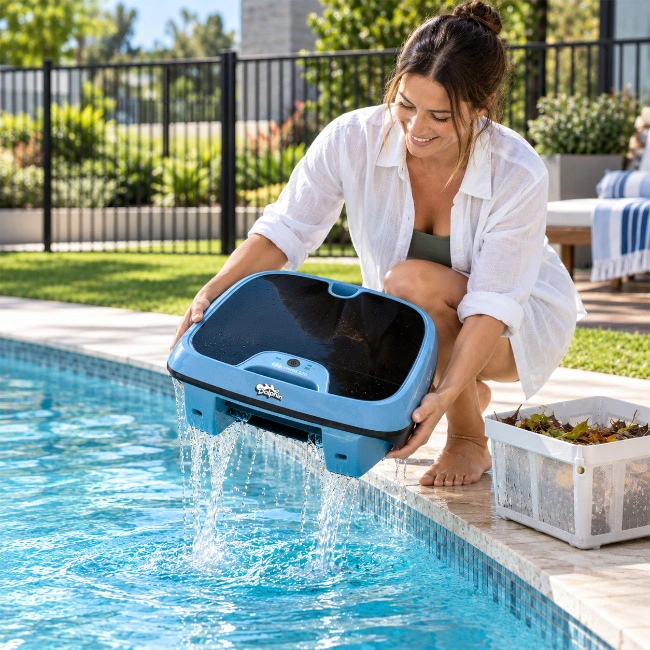
A robotic surface skimmer takes a repetitive job out of the day by collecting debris while it's still floating. The benefit shows up most in pools that get leaves or insects often, rather than those needing only the occasional scoop.
Struggling with pool problems? Explore Clark Rubber’s Pool Care Services today.
Depending on the model, it may collect floating leaves, insects, pollen, and other light debris. Check the product specifications for its filtration level and intended debris types.
No. Your pump and filter still circulate and filter the water. A robotic surface skimmer provides additional cleaning at the top of the pool.
A surface skimmer does not collect debris that has already sunk. You may still need a robotic floor cleaner, manual vacuum, or other suitable equipment.
This depends on how the unit charges. If you are considering a solar model, check whether it also offers DC charging and how much direct sunlight reaches your pool.
Follow the instructions supplied with the model. Remove the cleaner during swimming whenever required.